


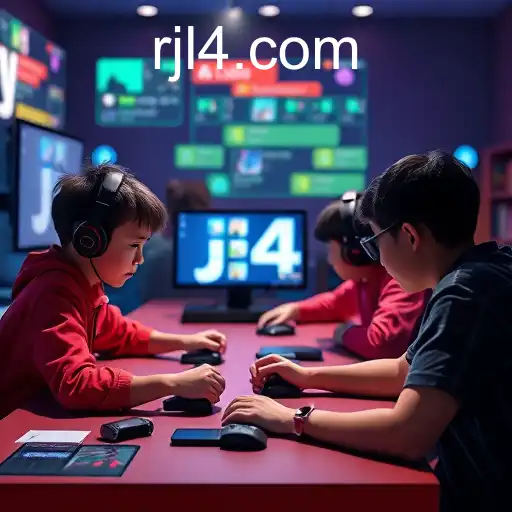
Exploring how gaming affects education and social dynamics in 2025.
In recent years, the intersection of gaming and education has become a focal point of discussion among educators, students, and policymakers. The year 2025 marks a significant evolution in this domain, with digital platforms such as 'jl4' becoming an integral part of educational frameworks.
Games have long been recognized for their potential to enhance learning experiences. Game-based learning engages students in an interactive and immersive environment, offering a break from traditional teaching methods. The online gaming platform 'jl4' has been at the forefront of this movement, with its innovative approach that allows educators to integrate academic content into gameplay. This not only fosters critical thinking and problem-solving skills but also promotes a sense of collaboration among peers.
Furthermore, gaming has redefined social interactions amongst the younger generation. Platforms like 'jl4' now serve as social meeting grounds, providing spaces where individuals from diverse backgrounds can communicate, collaborate, and compete. This has inadvertently led to the creation of tighter-knit communities, where members exchange ideas and learn from each other beyond the traditional confines of a classroom.
The blend of gaming and social media has also introduced new dynamics into the educational sphere. Users of platforms like 'jl4' often engage with content created by peers, which can range from tutorials and walkthroughs to reviews and constructive critiques of each other’s performances. This user-generated content adds an additional layer of peer-based learning, with information being exchanged in real time.
Despite the numerous benefits, there are also growing concerns regarding gaming's impact on attention span and physical health. Critics argue that excessive gaming can lead to decreased physical activity and social withdrawal. However, proponents believe that these issues can be mitigated through moderation and mindful integration of gaming into daily routines.
In conclusion, as 'jl4' and similar platforms continue to evolve, they represent a paradigm shift in how education and social dynamics are perceived. It is imperative for stakeholders in education—including educators, parents, and policymakers—to harness the potential of gaming platforms to maximize learning outcomes while addressing concerns related to health and well-being.

